
A $3 weekly planner might seem too small to matter. But when one helpful file sells again and again, those small sales can add up. So, how much can printables make? The honest answer is: anywhere from a few dollars a month to several thousand dollars a month. Your result depends on what you create, who it helps, how well it is presented, and how consistently you keep going.
For a beginner, the goal is not to chase a huge number right away. The first win is creating one useful printable, listing it for sale, and proving to yourself that someone will buy it. You do not need design experience, expensive software, or a large social media following to begin.
How Much Can Printables Make for Beginners?
Most new printable sellers start slowly. That is normal. Your first month may bring no sales, a few sales, or enough to cover a small bill. It does not mean you chose the wrong idea. It usually means you are still learning what people want and how to show your product clearly.
Here is a realistic way to think about income:
- A brand-new shop with a few products may make $0 to $100 per month at first.
- A shop with 20 to 50 useful products may make $100 to $500 per month.
- A well-organized shop with strong products, clear listings, and regular updates may make $500 to $2,000 or more per month.
- Some experienced sellers earn more, but those results usually come after building a larger product library and learning from many months of testing.
These are examples, not promises. A printable business is not instant money. It is a simple business model that can grow over time because you make a product once and can sell it more than once.
A simple income example
Imagine you sell a printable budget planner for $5. If you make 10 sales in a month, that is $50 before any selling fees. If you have 10 different products and each one makes 10 sales, that becomes $500 before fees.
You do not need one product to go viral. A small collection of useful products can be more dependable than waiting for one big hit.
Your action: Write down a starting goal that feels encouraging, such as your first $25, first 10 sales, or first product listed.
What Changes How Much Printables Can Make?
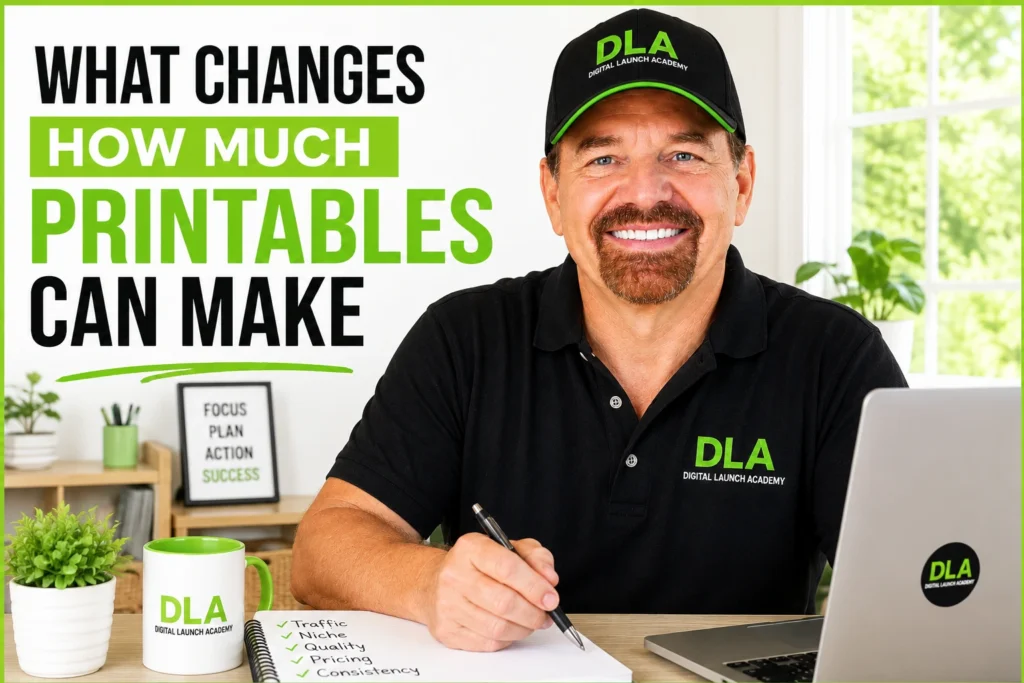
Your earnings are affected by a few simple things. You do not need to master all of them today. Start by understanding what matters most.
The problem your printable solves
People buy printables because they want help with a task. A meal planner helps them decide what to cook. A cleaning checklist helps them remember what to do. A medication tracker helps them stay organized.
The clearer the problem, the easier the sale. A printable called “Pretty Planner Pages” is vague. A printable called “Weekly Meal Planner and Grocery List” tells the buyer exactly what they are getting.
Think about everyday problems people already have. Busy parents may want chore charts. Retirees may want appointment trackers. Side-hustlers may want simple expense sheets. Teachers may want classroom checklists.
The price you choose
Many simple printables are priced around $2 to $10. Larger bundles, such as a full wedding planning set or a 50-page budget binder, can be priced higher.
Lower prices can make it easier for a new customer to try your shop. Higher prices can work when your product saves time or includes more pages. There is no perfect price on day one. You can start with a reasonable price, watch what happens, and adjust later.
Remember to consider selling platform fees when setting your price. You do not need complicated math. Just make sure a $3 product still leaves you with an amount you feel good about after fees.
How many products you offer
One printable can sell. But more helpful products give shoppers more ways to find you. A shop with three products has three chances to make a sale. A shop with 30 products has 30 chances.
This does not mean you should rush out 30 random designs. Build a small group of products around one topic. For example, a home organization shop could include a cleaning schedule, pantry inventory, decluttering checklist, moving checklist, and family chore chart.
Your product photos and description
Because a printable is digital, the buyer cannot hold it in their hands. Your listing images need to show what the pages look like and how they can be used.
Canva makes this beginner-friendly. You can place your printable page inside a simple mockup, add a clear title, and show a few close-up pages. Keep the design clean. The goal is not fancy graphics. The goal is helping a buyer understand the product in seconds.
Your description should answer basic questions: What is included? Who is it for? What size is it? Is it a digital download? Can they print it at home? Clear answers reduce confusion and help people feel comfortable buying.
Your action: Choose one person you want to help and write one sentence: “I will create a printable that helps [person] with [problem].”
A Beginner-Friendly Plan to Make Your First Sales

You can build your first printable in small steps. Do not wait until you know everything. You only need to complete the next step.
Step 1: Pick one simple product idea
Choose an idea that is useful and easy to create. Good first products include:
- Daily to-do lists
- Weekly meal planners
- Savings trackers
- Cleaning checklists
- Habit trackers
- Password logs
- Appointment planners
- Pet care records
Pick one. A simple, finished printable is more valuable than a complicated idea that stays in your notes.
If you’re new to selling online and want to understand the bigger picture, start with Can Beginners Sell Digital Products? for a complete beginner-friendly guide.
Step 2: Create it in Canva
Open Canva and start with a US Letter document if you want customers to print at home. Search Canva’s templates for words like “planner,” “checklist,” or “tracker” for layout ideas.
Then make the page your own. Use easy-to-read fonts, enough writing space, and a calm color palette. If you feel stuck on wording, use AI to help you create a simple list of sections or checklist items. For example, ask: “Write 20 simple weekly cleaning checklist tasks for a busy household.”
Always read through the results and edit them so they make sense for your customer. AI can give you a starting point. You are still the person making the final product helpful.
Step 3: Save and test your file
Download your finished printable as a PDF Print file. Open it before listing it. Check for spelling mistakes, cut-off text, tiny writing spaces, or pages that feel too crowded.
If possible, print one copy at home. This small step can save you from selling a file that looks different on paper than it did on your screen.
Step 4: Create a clear listing
Use a direct product title. For example, “Weekly Meal Planner Printable With Grocery List” is much clearer than “My Favorite Planner.”
Add several preview images. Include a short description in plain language. Tell buyers they are purchasing a digital file, not a physical item that will arrive in the mail.
Step 5: Repeat with related products
After you list your first product, make a related one. If your first item is a meal planner, your next item could be a pantry inventory sheet or a recipe card template. Later, you can combine those items into a bundle.
This is how printable income often grows: one simple product, then another, then a helpful collection.
Your action: Set a small deadline. Give yourself one week to finish and list one printable. Not a whole shop. Just one product.
Common Mistakes That Slow Down Printable Income
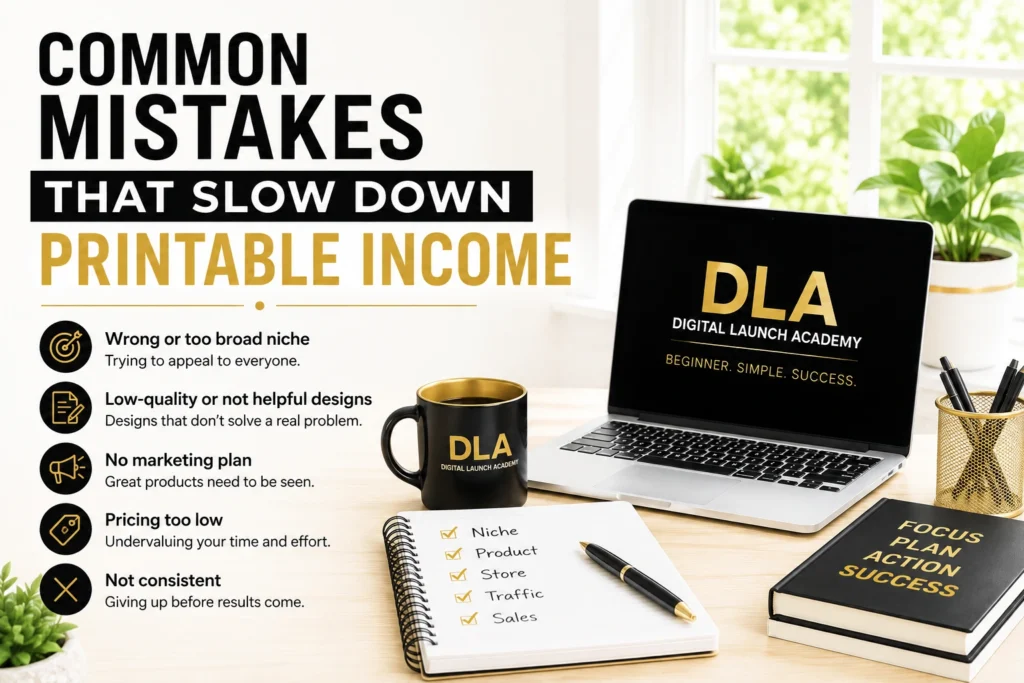
The biggest mistake is expecting fast results from one product. Give yourself time to learn. You may need to improve your product title, adjust your preview images, or create a more specific version of an idea.
Another common mistake is copying what everyone else makes without thinking about the buyer. A general planner has lots of competition. A planner for night-shift workers, new puppy owners, or caregivers may speak to a clearer need.
Also, do not spend weeks making every page perfect before you publish. Aim for useful, clean, and easy to use. You can improve your products as you learn what customers respond to.
Keep a simple record of what you list, the price, and any sales. After a few months, you will begin to see patterns. Maybe checklists sell better than planners. Maybe one topic gets more attention than another. That information helps you make better choices without guessing.
Build at a Pace You Can Keep
Printables can make meaningful extra income, but they work best when you treat them like a small garden. You plant one useful product, care for it, and keep adding more over time. Some products will not sell much. Others may surprise you.
If you feel nervous about technology, start with Canva, one page, and one clear purpose. Digital Launch Academy teaches this kind of step-by-step approach because beginners do not need more confusion. They need a small next step they can actually finish.
Your first printable does not have to change your life this month. It only needs to get you moving. Create something that makes one person’s day a little easier, put it out into the world, and let that first completed product build your confidence.
Don’t Know What to Create?
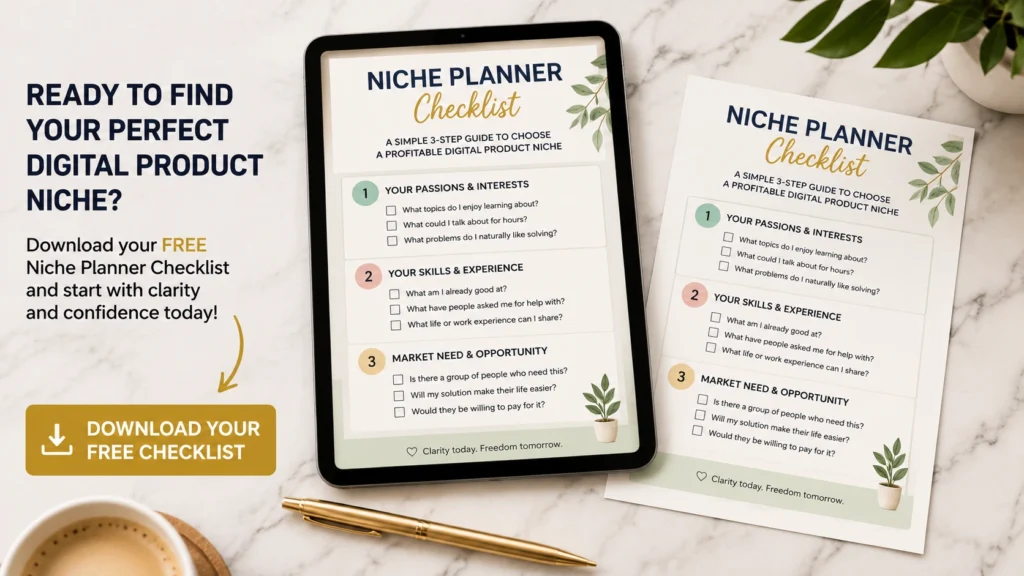
Most beginners don’t fail because they lack talent.
They fail because they’re overwhelmed by too many ideas.
Download the Free Niche Planner Checklist and discover a digital product idea you can actually build.
